
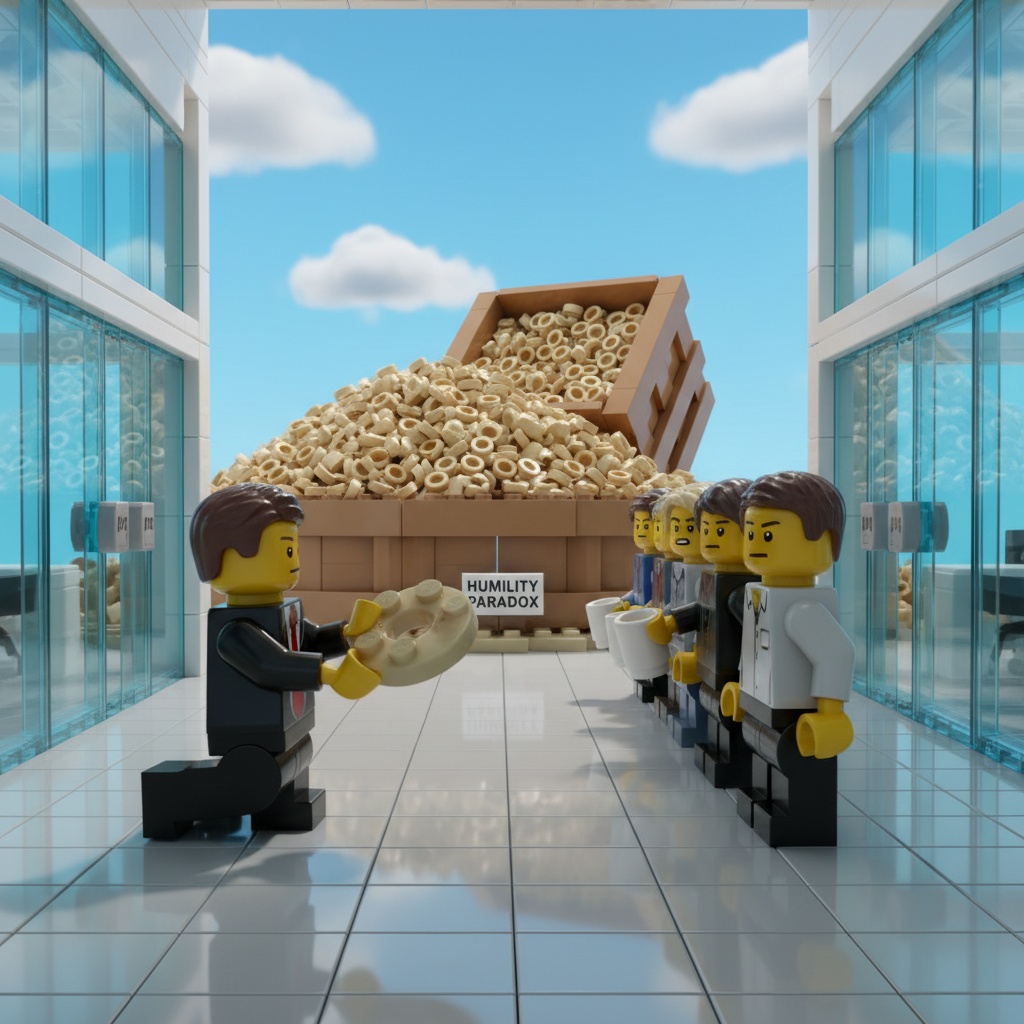
The CEO's Humility Paradox: Why You Work For Your Employees
What is the non-negotiable cultural standard required to scale a business without losing quality?
Key Takeaways
Leadership Warning: Standards depreciate by 20% at every level downstream unless the CEO acts as the 'Chief Culture Officer' and accepts they work for their team.
Scaling High-End Service: The wealthy don't need special treatment; they demand 360-degree competence and seamless experience, signaled by staff, technology, and environment.
Digital Leverage: Nuts.com's founder reveals how shifting from $3 to $100 per day on Google AdWords in 2003 immediately increased daily orders tenfold, terrifying the old guard.
Digest Info

The CEO's Humility Paradox: You Work For Your Employees
Andy Purcell argues that leaders must embody core values daily, recognizing they work for their employees' success. He warns that standards degrade by 20% at every level downstream unless the culture is constantly communicated and enforced, acting as a self-weeding mechanism.
“The biggest mistake that you know ceos and owners and operators make: They think that the employees work for them when in reality you work for your employees.”
Guys, Andy, question number three.
Andy, 14 years in,
I didn't build this business to be an employee in my own companies.
How do you scale without losing control, standards, or loyalty?
What steps would you take to build a self-managed team you trust to run it right?
Well, I mean, if it was easy to scale, everybody would scale.
It's very, very hard.
Okay.
I don't know how many employees.
Does he say how many employees?
Negative.
Okay.
It doesn't matter if you have three or five or 50, 500.
The answer is still the same.
It's the same answer that I gave in the second question.
Number one, are you living the standard?
Are you living it every day?
Okay.
Because here's the thing.
You might think you can fool your employees.
You might think you can fool your kids.
You can't fool either one.
They know if you're actually doing it or you're not doing it.
And if you come in and pretend it's not going to work no matter what.
All right.
So let's throw that out the window and let's say you are living the standard.
How do we scale?
Well,
Number one, you've got to take your key reports and you have to consistently work with them every single week about the standards.
We have to communicate about the standards.
We have to speak in that standard language.
We have to... Everything, every action, everything that we take should be tying back to the core values of the business that you have set.
If you don't have core values, you need to set them and you need to speak in that language to your employees, which means...
every action that we take, every action we don't take, every hire that we make, every time we fire someone, every time we make a move.
These all have to be tied back to these guiding principles of what our value system is.
And if you're not doing that on a consistent basis, the culture can't live and breathe and exist inside of your company.
All right.
So
The difference between a really great culture and a really bad culture is putting some shit on the wall and never talking about it again, or putting some shit on the wall and making it your only conversation that you ever fucking have about everything that you do.
That's the difference, okay?
And those values have to be lived
By you to the best of your abilities.
And by the way, you're not going to be perfect.
You're going to fuck up.
And when you fuck up, you got to be able to own that and say, hey, you know what?
I fucked up.
The purpose of value system isn't to live perfectly all the time.
It's to let them guide you so that you understand that when you do make mistakes, this is where you made them and I need to correct them, which keeps the culture in line.
If you don't have a strong culture, it's very hard to scale and hold standards.
All right?
And the reason that...
Most people can't scale is the exact reason that this guy's putting out.
They put all the systems in place to scale, but the standards at the top get watered down by 20% at every level that you see downstream, okay?
Like depreciation.
it's just yeah it's just uh it's just they you know it's like the game of telephone bro you you whisper in the guys here next to you one thing and by the time it gets all the way around it's something completely different and that's the same way with standards over the course of time if you don't make them a living breathing part of your communication that exists all the time all right so
When you have a strong culture and your key reports understand what I'm talking about because you work with them day in, day out, day in, day out for years, eventually those guys start to embody the culture exactly as you would, and then that makes scaling much, much easier, okay?
Everybody wants to hire this out, and you can.
You can hire it out, but you're still going to run into the same problem.
You're going to run into the problem of people who aren't the culture people of your brand doing things that aren't in line with the culture of your brand, and you're going to constantly be dealing with this issue.
So it's kind of like...
It's kind of like the idea of cleaning your house, all right?
It's a lot easier to pick up your shit right after you eat and put it in the sink or put it in the dishwasher than it is to let the shit pile the fuck up to the size of a mountain that you don't even want to look at because you understand how hard it is to fucking clean, okay?
That's the difference.
A little bit every single day is a lot more than a big reset every...
60 days.
Right.
That doesn't work.
Because what that comes across as is basically, oh, the boss, he's fired up today, and tomorrow he'll go back to his normal self.
And so they don't ever listen.
So it has to be an everyday...
You have to live it.
You have to breathe it.
You have to embody it.
And the only way for that to get spread is for you to help other people embody those things.
And eventually, you'll have a great leadership team like we have here that helps the culture flow downstream.
I would say that most of our people that work for me in some way, shape, or form, no matter what company, are handling their shit at a pretty high level.
Now, are there exceptions?
Absolutely.
But
They're very rare.
Yeah.
Okay.
And those people really never last.
Okay.
And that's the other good thing about having a strong culture is that it weeds out the people very quickly that do not fit.
Once you have it set to where it's living, breathing, and it's part of the system, everybody in the company knows when someone comes in that doesn't fit and that person knows too, they feel it.
And then eventually, you know, they wash out.
So it protects you from the cancer and it protects you from the negative by having that strong culture.
So,
we talk about scaling you have to understand yes plenty of businesses scale and plenty of businesses are okay because maybe they're in something that makes enough profit to where they don't have to worry about holding these standards right like if somebody's subscribing to a tech platform and there's really no communication
with any of the employees at all a lot you're going to be able to get away with a little bit less standard because the products what's people want and they're buying it and um you know you have more freedom unfortunately for most of us we exist in businesses that require strong culture for us to grow and even if you have a company that doesn't require and you add it to it you're going to have a much better company than what the other companies have so there's never
And there's never a company that won't benefit greatly from having strong culture.
And it starts at the top.
And it's a consistent message that you have to fucking communicate in all the time.
OK, when you're correcting people, like I said, when you're hiring people, when you're firing people, what decisions you make for how you're going to grow, how you're going to promote people, who's going to be the leaders.
All of these things should be culture driven, including how you reward your people.
And if you want fucking great culture, you reward people for embodying great culture.
And that great culture will allow you to scale at a much better rate with higher standards than any other thing I could tell you to do.
I want to ask you this, and maybe I'm thinking too much into it on this, but on this, I didn't build this to be an employee in my own company.
And I've heard you say, you know,
i am an employee of my company you know i'm saying you made this like separation like yeah everybody obviously knows your position here right there's no doubt about that but it doesn't feel like that feels like you're a part of the team well because i recognize that i have a role just like everybody else has a role yeah and that's the biggest mistake that you know ceos and owners and operators make
They think that the employees work for them when in reality you work for your employees.
Okay.
Because you're responsible for their wellbeing.
You're responsible for their success in life.
And if you don't take that seriously as, as a leader, they're not going to take you seriously as a leader either.
All right.
So you have to give a fuck.
Otherwise, you, by the way, this is a great point that you bring up, because without this point, none of that can even matter.
Right.
So like the way I look at my role here is, you know, Sal operates the operating, you know, Jason operates operating.
My role here is to go out and do what I'm good at, run the things I'm good at.
And then, you know, go around and be what you would call like the chief culture officer and, you know, talk to people, find out where the holes are, find out what they need, what they don't need, what the problems are and fix those things as you go.
And I look at that as just like me.
That's my oar in the boat.
Like I've got to I've got to handle that part.
And that part, while, you know.
I guess, you know, you would consider one of the most important parts.
I don't value it more than the guy in the backpack in the box because it takes a tremendous amount of humility at first, right?
But once you get over that and you're like, okay, well, this is just my role, then you earn the respect of your teammates and your teammates are your employees.
I don't look at employees as employees.
I don't think...
don't I don't know maybe maybe some maybe some of my employees look that way because we have so many that don't you know there's some that don't know me you know I'm saying but I think any of the people that I'm in contact with on a daily basis know that I give a lot of fucks about them and it hurts me when they decide to leave bro like I feel I don't look at people when when we lose a good employee I don't look at it like fuck them you know what I look at it like man I fucked up
I failed that person as a leader.
You know what I'm saying?
And that's the difference, I think, between great leaders that their team respects and goes hard for and leaders that, you know, have people that come in and clock in and clock the fuck out and go home.
You know what I mean?
Yeah, bro, I think that's so fucking important.
It's another oar in the boat.
Because it doesn't matter how good you are at being the chief culture officer.
If there's nobody packing the box right, it doesn't matter.
It doesn't fucking matter.
It's
I think when you first start to have a business, you kind of want that –
prestige and that.
Here's my name plate.
I'm the boss.
That's right.
Right.
But that's not really what makes a boss.
What makes a boss is doing the things that I just mentioned.
It's giving a fuck about your people.
It's doing the best that you can.
It's recognizing that what your role is and executing that role for the benefit of the team.
And it doesn't matter if you're the chairman like I am or the CEO or you're the brand new guy in the back.
You know what I'm saying?
Yeah.
We are all a part of the team, and we all have to row.
And if we don't all row, we can't fucking win.
And that's that.
I love it, bro.
I love it.

Retaining the Mega Wealthy: Why Competence Trumps Customization
Scott Galloway advises a high-end dentist that retaining wealthy clients requires 360-degree competence and signaling innovation across every touchpoint—from staff presentation and technology to the waiting room vibe. He argues against segmenting treatment, emphasizing that all clients demand excellence.
“I don't think you need to overthink segmenting your consumer base and how you should treat people differently. Just give them all fantastic service.”
Hey, Prof G. This is Lee in Florida.
I'm a 36-year-old married father of two young boys.
I'm also a dentist, and my question is around my job.
I've recently been fortunate enough to find my way into a very successful practice with an excellent reputation that sees numerous very wealthy families as patients.
Thankfully, I found it very easy to interact with pretty much all the patients at the practice, if I just be myself.
And the welcome has been warm, and the selling dentists and staff have been enthusiastically endorsing me to all their patients.
As I take over ownership of the practice, I am faced with the obvious reality that I am definitely not the friendly, jovial, 71-year-old man that these people have known for the better part of their lives.
I'm new.
I love for all the practices patients to stick around, and so far things have gone really well in that regard.
My wife and I have found a small modicum of success, but interacting with a mega wealthy and billionaire class is pretty new to me.
I'd like your input or thoughts on tailoring an exceptional experience to all of my patients, but perhaps particularly to the mega wealthy patients the practice sees, so that everyone who walks in and out feels special, feels important, feels valued, and leaves feeling like their dental team genuinely cares about them.
Because we do.
Thanks.
So first off, you know, take pause and recognize your achievement.
And it sounds like you've struck a relationship with a dentist who wants to hand over his practice or slowly but surely sell your practice.
So you're in a great spot.
And I think you and your your partner should feel really good about your achievements now.
With respect to your question around how to handle the kind of wealthy class, I don't speak for the wealthy.
What I can tell you is people, just they say people eat with their eyes.
I think people evaluate a dental practice with their eyes.
Are the people in cool figs or whatever it is, scrubs,
Does the place look good?
Do you have a cool Nespresso machine?
Like just a nice, clean, professional feeling space.
The staff that greets you, how professional they look, how computer generated is automated.
Are you sending people reminders via text message?
Does your site look clean?
You know, all that good stuff.
The billionaire class, in some, I think they just want competence.
But I think that's what everybody wants.
I don't think we're that... I'm not a billionaire.
I guess I would describe myself as wealthy, but I'm far, far from a billionaire.
All they want is competence.
Friendly, competent, get them in the chair.
This is what's going on.
Hi, how are you?
And just hire outstanding people.
Now, hiring outstanding people on a staff means, quite frankly...
firing a lot of people.
That doesn't sound aspirational, but it means paying them a little bit extra, but demanding more from them, that they're very good at what they do, that they look good, that they're presentable, that they have, you're all in kind of the same uniforms, that the place looks fantastic, that you have new technology, and that when you find good people, you, I've always found you want to find, you want to hold people to a higher standard and then pay them at a higher standard.
But I don't think that they're much different, if you will,
than quote unquote middle-class families.
I think they appreciate they want to get in and out.
They want to know that you're very good at what you do.
Go through the customer experience.
I used to do this as a consultant.
From the moment they park to the moment they get out of the car, what is the first thing they see?
How do the windows look?
How does the technology look?
What do they see in the waiting room?
What's the vibe like?
What's the music playing at a low volume?
What's the technology you're offering them in the store that signals or in the chair that signals the innovation?
What's the follow-up?
What does the text look like?
What does the design look like?
Every single touchpoint.
And then obviously you've got to be great at what you do in the chair, but I think it's more about signaling innovation through a variety of touchpoints and kind of a 360 around the consumer.
But I don't have any, I really don't think you need to be thinking about
how and why to treat people who are very wealthy differently.
What I would suggest is that you and your wife be as social as possible, because the reason I saw Dr. Spodek and Del Rey is that, like everything else in my life, all my friends now are my kids' friends' parents.
So I think there's definitely an advantage to being as social as possible and putting yourself out there.
And when people hear you're a dentist, they're gonna look you up and wanna come to you.
But let me finish where I started.
And I apologize, I didn't give you any silver bullets here other than just running a great practice.
The fact that you have the discipline, the certification, and that you figured out a good dental practice to sound like it's slowly by over time, brother, you're tracking.
It sounds like you're doing really well.
And I don't think you need to overthink segmenting your consumer base and how you should treat people differently.
Just give them all fantastic service and make sure that
that the environment signals innovation.

The $97 Panic: How AdWords 10x'd Orders Overnight
Nuts.com founder Jeff Braverman recounts how hiring an AdWords expert and increasing the daily budget from $3 to $100 in 2003 immediately resulted in a tenfold increase in daily orders. The sudden volume caused his father, a creature of habit, to panic and demand the campaign be shut off.
“The shift was just still not to spend that much more, but it was going from $3 a day to $100 a day.”
So how did you start to use the Internet or see the Internet as a bigger opportunity?
What kinds of things were you doing just to even create awareness around what you were offering?
Yeah.
I saw the potential with Google certainly in 2003.
Once I joined the business, I started seeing it.
A book came out.
I don't remember exactly when it was one of the first books about how to use Google AdWords.
And at some point I just hired the guy.
The guy who wrote the book, do you remember his name?
Yeah, Andrew Goodman.
The guy named Andrew Goodman wrote a book.
It was like a paperback about how to use Google for your business.
Oh, I'm embarrassed to say, I didn't even, and I'm friends with him still, but we don't work together anymore.
But a friend of mine sent me the PDF.
I didn't even pay for it.
So we were one of the first, not the first nut guy online.
There was a couple other people, but we're in that freshman class, right, of people online.
So there was some distinct first mover kind of competitive advantage.
And kind of I looked at it similar earlier on.
It's like, well, if we can sell one order to one customer in every state a day,
That's 50 orders a day.
And at an average price of what, 20, 25 bucks an order?
Maybe a little more than that.
And we used to charge shipping then.
I don't remember what it was back then, but it could be a little bit more.
I don't remember, to be honest, back then.
So bottom line is I said, hey, I don't like this wholesale bulk stuff, this concession supply stuff.
I don't like selling.
I like more building and engineering than being behind the scenes.
Let's go all in.
Let's take advantage of this early mover advantage and just run faster than...
This is a stodgy industry.
Let's move faster than anyone else in our space.
We probably had, let's say, call it 150 or so products.
I started adding some more products at the time, but nothing aggressive.
And let's really utilize the power of Google AdWords.
So what did that mean?
I mean, this is 2003.
You're revamping the website.
And again, 2003 websites, these are a different world.
Because before, and we're going to get to the day when you launched it, because I think it was December 4th, 2003.
Correct.
Is that right?
Yes, yes.
But before that date, you were getting what, between one and five orders a day on average?
Yes, it could be a few orders a day type of a thing.
So what before December 4th, because we're going to get to that.
Yeah.
What did you do?
What did you put in place that was going to change the equation that day?
So we were spending very small amounts of money advertising.
Okay.
And the shift was just still not to spend that much more, but it was going from $3 a day to $100 a day.
Got it.
You were going from spending $1,000 a year to $36,000 a year.
Correct.
Which was a big deal.
Through Google AdWords.
Correct.
Okay.
So to December 4th, 2003-
is the day you relaunched this new revamped site, Nuts Online.
We launched.
The ad campaign's immediately on.
And it's like the floodgates completely open.
It goes up 10x immediately.
But if we were doing three orders a day, suddenly it's 30.
Wow.
But the reason why you saw this shift was because of the way you used Google AdWords, right?
Yes.
I mean, that was the, yes, we launched a much, the site was better.
Don't get me wrong and faster and friendlier and easier to use and so on.
But then it also, then at that point I was able to unlock, you know, unleash, begin to unleash Google.
When all of a sudden this flood of orders comes in, it's still a small team of people.
Like you guys are literally packing these orders.
How did your dad and uncle respond?
Were they like, oh my God, this is amazing.
So my dad, I mentioned earlier, but my dad's a creature of habit.
And look in the store, when we would be busy for Christmas, just in the store, he'd be so nervous.
I loved it.
He'd just be so nervous.
It was busy.
But most days it would be dead.
Like we'd be sitting there on Saturdays in the summer and it's like – I did the math.
I finally said we're shutting down on Saturdays.
We were making $2 a person an hour.
It was just like there was nothing.
There were no customers.
Nobody buys nuts in the summer unless they're at a baseball game, I guess.
But like the retail business was dying anyway.
There was nothing doing.
So he would be so nervous when it was dead too.
Yeah.
So here, right.
It just like, it's just like, boom, boom.
Like, like, cause suddenly you're talking about, it could be a few an hour.
Right.
And he says, shut it off.
He said, shut it off.
He said, shut it off.
Cause he was so nervous because again.
It was just us.
We have to do the work similarly.
You got to fill those orders.
Like, we're the laborers.
And, you know, there might have been some expletives said, but it's like, if you can't take the heat, get out of the kitchen.
I told them, go home.
We got this.
The 40,000-Pound Peanut Protest That Didn't Convert
Jeff Braverman details the famous fan campaign where 40,000 pounds of peanuts were sent to CBS to protest the cancellation of the show Jericho. While the stunt generated national press and temporary show renewal, analysis showed the massive traffic spike did not convert into long-term customers for Nuts.com.
“We shipped 40,000 pounds of peanuts. That full truckload of peanuts.”
And tell me this story because this is a crazy story.
And it actually got you tons of press.
But what was the story?
Yeah, so this post-apocalyptic drama, like you said, got canceled on CBS.
And fans decided to protest because in the last episode, there was this historical illusion, and it talked about the details matter less, but the U.S.
general says to the Germans, nuts, like we're not going to surrender, nuts.
So fans decided to send nuts in protest to CBS.
In the show, a character said nuts in response to something like,
Yeah, I think it's a true story.
Okay.
I forgot if it was the Battle of the Bulge or Battle of the Stone.
I don't remember.
But the general says nuts, so fans decide that's their rallying cry.
Nuts.
And they're going to send nuts to CBS.
To protest CBS's decision to cancel the show.
Correct.
So we see these strange orders coming in and my cousin says, hey, what the heck's going on here?
I'm scared.
There's people placing orders for one pound bags of different types of nuts, often cheap nuts, like mixed nuts and shell or peanuts.
Yeah.
Shipping to CBS.
In New York?
Yeah, their New York office.
Okay.
So my cousin was like, hey, we can't ship this stuff.
We have to cancel it.
And I said, hold on.
Let me just do some research here.
And I find out what's going on.
The show's canceled.
And I'd never seen the show.
And by the way, were they sending it to a specific person at CBS or just a pound of nuts to CBS?
I'll get her name wrong, but something like Nina Tassler or something like that.
Okay.
I just looked her up.
Nina Tassler.
She was at CBS.
there's a lot of energy here.
And I said, let's go, let's do something here where you have like all these people, it's super inefficient and it's expensive to ship a one pound.
The shipping is freaking $8 or something like that.
Let's harness this energy.
You know, when you're a fundraising drive, they have the thermometer type of a thing.
I said, let's go, let's get up a thermometer.
And this is where I've always heard this expression, you know, man plans and God laughs.
And then,
Probably for the next three weeks, I didn't sleep.
Wait, so sorry, on the website, let me understand this, you had a banner or something that said, hey, if you don't want CBS to cancel Jericho, click here?
Save Jericho, right?
Save Jericho, send peanuts, and we're going to make it super easy.
Give $10, give $20, give $50, whatever this is, because we had a gift certificate functionality.
And we'll send nuts to CBS.
We'll send nuts in bulk, in 25-pound cases, freshly roasted peanuts, because that was our shtick, still is our shtick.
And everyone came to us.
We start collecting so much money.
I think very quickly it goes to $40,000.
How many pounds of peanuts did you end up sending to CBS?
So the number I remember was we shipped 40,000 pounds of peanuts.
40,000?
That full truckload of peanuts.
What did they do with all those peanuts?
I don't know.
I don't remember such a long time ago.
I think they ended up donating them.
We gave them...
addresses of where to send them where people could use them.
I mean, just the publicity that you got out of that.
National Enquirer more than once, which was quite embarrassing.
I mean, and by the way, this was they decided not to cancel it.
They decided to renew it for another few.
Well, it was only seven more episodes, but they did.
They agree.
And and I guess they actually appreciated the stunt.
They like invited you to meet the cast.
Yeah.
They flew me out.
I was the celebrity at the fall CBS fall lineup party.
Mind you, I slept at my friend's dorm or whatever the hell I stayed, you know, I walked there, you know, people come and live in scenes.
Um, this cast were kissing me.
Um, and these were like famous people, but yeah, they, they, and then when Nina Tassler brought it back and if she says, just please stop sending the nuts.
Yeah.
But for us, I mean, our website crashed at one point in time.
We were on like K-Rock and all these places where like the traffic was unbelievable.
Interestingly, from a business standpoint, we then did some analysis on, hey, did these people become customers and come back?
Not really.
But what I realized was we're getting links, as you can imagine, mattered a lot then.
New York Times, that's a lot of authority.
It's lending.
Ultimately, when you'll get a kick out of this, when the campaign was done, I then redirected that page to our Nuts page so our rankings would go up once everyone was done with this thing.
Wow.

The Bagel Gimmick: Can Pop-Up Scale to 300 Locations?
Analysts discuss Pop-Up Bagels' ambitious plan to open 300 locations, surpassing Sweetgreen, leveraging a $60 million valuation and celebrity backers. However, they question if the viral 'grip, rip, and dip' novelty can overcome the historical challenges of scaling bagels: low margins, labor intensity, and maintaining quality consistency nationwide.
“Is this a viral social media trend or is this a brand with staying power? ... Is this a gimmick... or is this a new paradigm in bagel making?”
Welcome back.
My winner is Papa Bagel, which is trying to go where few bagel shops have gone before nationwide.
Papa Bagel has 16 stores now, seven of them in New York.
But as Bloomberg reported, the company has embarked on an ambitious plan to open 300 locations across the country, which would give it more stores than Sweetgreen.
It might have the money to pull it off.
Papa Bagel is profitable, valued at $60 million dollars.
and majority owned by a private equity firm that's also invested in bougie food names like Erewhon and Levain Bakery.
It also has a bunch of celebrity backers, including JJ Watt, Michael Phelps, and Paul Rudd.
If you're unfamiliar with pop-up bagels, congrats on not being addicted to social media.
These bagels have become a viral sensation for their grip, rip, and dip approach.
You can't get a bagel sandwich there,
These bagels come in orders of three, six, and 12, and you're supposed to dunk them into a tub of cream cheese, chips and salsa style.
But don't call it a flash in the pan.
Pop-Up Bagels likes to say it's, quote, not famous, but known.
It's unclear whether being known is enough to conquer the United States,
Unlike other food categories, bagel stores face major hurdles in expanding.
Maybe the only one that's earned chain status is Einstein Bros, with more than 700 locations, while the rest are mostly hyper-local mom and pop shops.
Toby, does pop-up bagels have staying power?
I don't know.
I do think they are quite delicious, mainly just because I usually get them when they're warm.
And that's the basic elements of a great bagel is if it comes out warm.
But yeah, this started out of a Connecticut backyard during the pandemic.
It was self-taught trial and error bagel maker, Adam Goldberg, kind of harnessed a lot of grassroots energy and just literally started selling these from his house.
And then eventually they had a store in this back alley next to a bike shop.
And
it did just become a viral sensation.
One, because it is different.
I mean, the bagels come unsliced.
They don't really have a traditional hole in the middle that you see.
You tear them and then dip them in the smear.
So it just already had a built-in layer of novelty to it, and then it just quickly started to spread from there.
The fact that it can break from normal bagel orthodoxy in New York and still attract an audience,
is one of the reasons why you start to see private equity circling a little bit, start to see maybe this does have staying power outside of the northeast area.
So I do think, too, that it is easily franchisable.
These stores are small.
Their average store size is 700 to 1,200 square feet, not big at all.
Their opening cost is 300K to 900K, which is a lot cheaper than Einstein bagels, which can cost you
A million bucks.
So I do think maybe that can also play a role in making this a franchisable opportunity.
The fact that it's just such a small footprint.
It's just fascinating to think about why no very, very few bagel stores have gone national.
And you mentioned Einstein Bros.
I don't think anyone would say that's a particularly good bagel.
It's just so hard.
to maintain consistency for your bagel into more than a dozen shops.
The logistics are very hard.
It's very labor-intensive, but it's also, at the same time, low-margin business.
A lot of people don't really get bagels after 1 or 2 p.m., so the sales window is extremely tight.
There's a lot of challenges facing pop-up bagels as it wants to expand.
But every time it does expand, there's a new store opening.
It's kind of like there's new Buc-ee's or a new In-N-Out that opens somewhere off the beaten path.
Because there's huge events.
They just opened one in Harvard Square in Cambridge, and they threw a huge block party.
They're coming to Atlanta.
So they're clearly running a pretty successful playbook when they do open a new store.
The trouble and challenge is going to be maintaining consistency when they open a new store.
And I think the big question here is, is this a viral social media trend or is this a brand with staying power?
Because, I mean, go back through the annals of food trends.
There are things that peak really high.
I mean, the cronut, for instance, this was going to take over the entire world, but then it just kind of slowly fades away from relevance.
Is this a gimmick, the fact that you tear it and the fact that it's not a normal bagel?
Or is this a new paradigm in bagel making that people actually are going to stick with?
I think that is the big question as they try to scale.
So I've had one experience with pop-up bagels last year.
I went because I just wanted to try it, right?
People were talking about it.
So I went and I was like, can I get a bagel?
And they said, no, you need to get three bagels.
Yeah.
And that kind of rubbed me the wrong way.
So I have a little personal beef with pop-up bagels.
Yeah, I guess you just got to bring your friends.
But I was just, you know, a normal person wanting to get a bagel.
And I had to pay for three bagels plus this huge tub of cream cheese.
They say it's to create a social experience.
So I wish them the best.
I'm just sharing, you know, the one personal experience that I had where I had to get three bagels when I just wanted one.
About this digest
Release notes
We remix the strongest podcast storytelling into a tight, twice-weekly digest. These notes highlight when this edition shipped and how to reference it.
- Published
- 10/28/2025
- Last updated
- 10/28/2025
- Category
- business
- Chapters
- 5
- Total listening time
- 30 minutes
- Keywords
- scaling strategy: culture, marketing, and high-end customer experience